Compliments of Kawika Freitas
Old Lāhainā Lū‘au
Director of Public and Cultural Relations
In ancient days the Hawaiian diet consisted mostly of fish and staples such as kalo or taro, ulu or breadfruit, and ‘uala or sweet potato. Fish was usually eaten raw or dried. Staples were cooked in an underground oven called an imu and the style of cooking is called kālua. For special occasions laulau or wrapped foods, pua’a or pig, moa or chicken, and i’a or fish were cooked in the imu. Let’s not forget a Hawaiian dessert cooked in the imu – kūlolo, which is grated taro, coconut milk, and sugar cane juice.
“A lū‘au experience encompasses a few key aspects of sharing in Hawai’i –
Food, Entertainment, and Hospitality.”
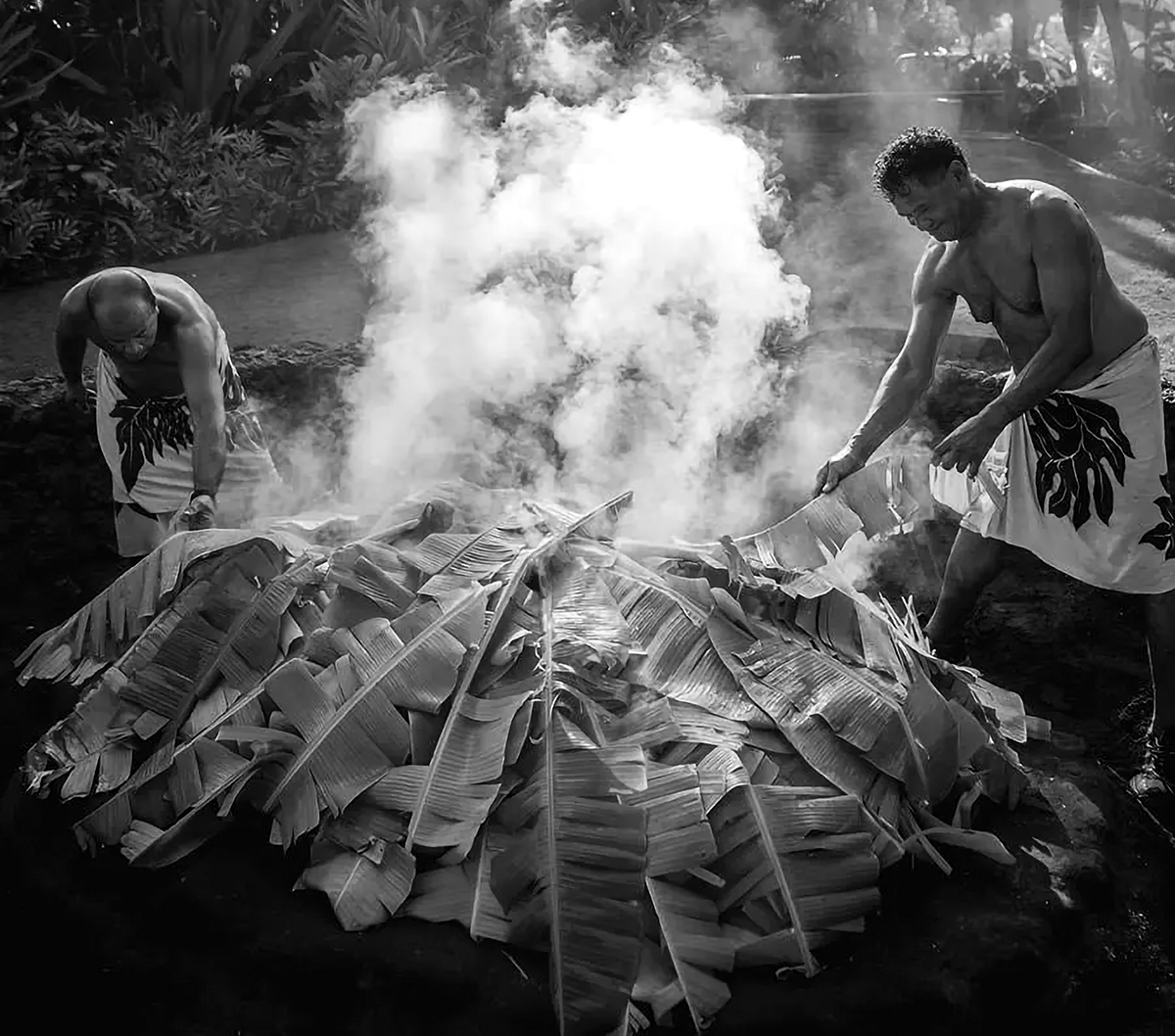
Cooking in an imu was hard work – First a hole in the ground is dug, dry leaves and twigs along with hard wood made up the base of the fire. Before lighting the wood, porous river rocks, that were round in shape with small holes, were placed on top of the wood. When the rocks get red hot, the fire logs are removed, and the rocks are leveled. Layers of shredded or peeled banana stumps are placed over the hot rocks. All the food that needs to be cooked is placed on these banana stumps, then covered with banana leaves. In ancient days, clean woven mats were placed over the banana leaves, then dirt or sand covered the mats completely making sure no steam leaks through.
This process is more of a steaming of food. This makes the food very moist. The charcoal adds a smokey flavor to the food. Based on the amount of food put in the imu, the amount of heat generated will determine the amount of time the food will cook. A 200-pound pig would need to be cooked for between 8-12 hours.
Kalo or taro was the main staple and after it is steamed in the imu, it is cleaned and cut and eaten as such, or more commonly it is mashed into a delicious paste known as pa’i’ai. Adding water changes its consistency and becomes poi.
Hawaiian spices were minimal – pa’akai or sea salt and ‘alaea a pinkish salt caused by exposure to clay. Inamona is a mixture of roasted kukui nut and ‘alaea salt and ‘ōlena is similar to turmeric. Attending an authentic lū‘au you can expect to enjoy – pua’a kālua, laulau, poke, poi, ‘uala, and kūlolo.
to be continued!